
nano banana pro vs nano banana 2: What changed and why this comparison matters
If you are evaluating nano banana pro vs nano banana 2 for real production work, the real question is not which model is "better" in abstract terms. The practical question is where each model creates leverage in your pipeline. In most teams, nano banana 2 vs pro is a throughput-versus-precision decision that affects cost, latency, and final asset quality.
For teams shipping creative assets every week, nano banana 2 vs pro should be handled as an operating policy, not a one-time preference.
The latest product updates reposition nano banana 2 as the fast default path for mainstream generation and editing, while nano banana pro remains the high-control option for demanding outputs. That split means your workflow design matters more than a one-time benchmark. If your team is deciding nano banana 2 vs pro only by a single prompt test, you will likely overpay or under-deliver. A durable nano banana 2 vs pro strategy depends on routing rules, quality thresholds, and quota planning.

nano banana 2 vs pro: model architecture and operating intent
At a model-family level, nano banana 2 is the high-efficiency image path tied to fast iteration and volume. Nano banana pro is built for reasoning-heavy image work where instruction fidelity, text rendering, and multi-element consistency can justify slower cycles. This is why nano banana 2 vs pro comparisons become clearer when you test difficult prompts instead of easy ones.
In simple terms:
- nano banana 2 is optimized for speed and scale.
- nano banana pro is optimized for precision and creative control.
This is where Gemini 3 Pro becomes relevant. The pro image path inherits reasoning-oriented behavior aligned with Gemini 3 Pro design goals, which is why nano banana pro often performs better on difficult composition constraints, dense scene logic, and detail-sensitive text elements.
Why Gemini 3 Pro changes the ceiling for nano banana pro
When teams compare nano banana 2 vs pro, they often miss the role of reasoning depth. Gemini 3 Pro introduces stronger multimodal reasoning behavior, and that matters when your prompt contains layered intent, not just style descriptors. In practice, Gemini 3 Pro style reasoning helps nano banana pro with:
- strict object relationships in complex layouts
- iterative edits that preserve earlier constraints
- harder text-in-image requirements in marketing and product visuals
- consistency under multi-step refinement
For quick drafts, nano banana 2 can feel very close. For complex finals, Gemini 3 Pro aligned behavior in nano banana pro is often where quality gaps reappear. In repeated nano banana 2 vs pro tests, this gap shows up most in multi-constraint scenes.
Side-by-side comparison: nano banana 2 vs pro for production decisions
| Decision area | nano banana 2 | nano banana pro |
|---|---|---|
| Core positioning | Speed-first generation and editing | Reasoning-first, professional-grade generation |
| Typical latency profile | Lower latency, better for rapid iteration | Higher latency, better for deliberate quality passes |
| Throughput fit | High-volume batches and user-facing generation | Final-pass creative and complex asset production |
| Text rendering pressure | Improved and usable in many cases | Generally stronger for difficult text fidelity tasks |
| Complex scene control | Good for common prompts | Better for multi-constraint scenes |
| Cost behavior | Better for frequent exploration | Better reserved for high-value outputs |
| Best workflow role | Draft, variant testing, broad experimentation | Final polish, brand-critical, accuracy-critical outputs |
In short, nano banana 2 vs pro is less a winner-take-all battle and more a staged production strategy. Treat nano banana 2 vs pro as draft lane versus final lane, and team decisions become faster.
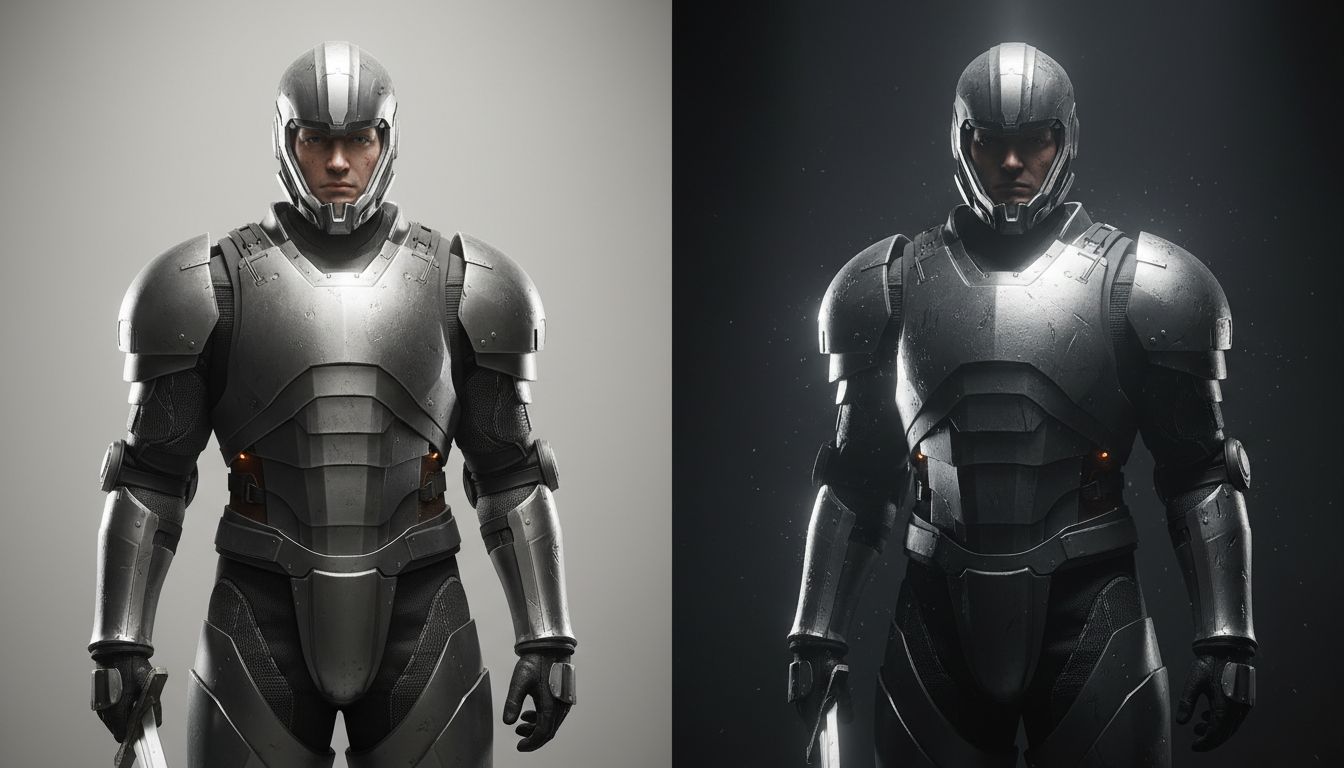
Two mini-case scenarios for nano banana 2 vs pro
Scenario 1: ecommerce growth team with weekly catalog refresh
A mid-size ecommerce team generates 1,200 lifestyle variants per week across regions. They start in nano banana 2 for concept spread, background variants, and localization drafts. Only the top 8% of assets move to nano banana pro for final text overlays, packaging closeups, and hero banners.
Result: faster creative throughput, lower blended generation cost, and fewer manual retouch cycles. This is a textbook nano banana 2 vs pro split: scale first, precision second. This scenario also shows how nano banana 2 vs pro can reduce creative bottlenecks during peak weeks.
Scenario 2: B2B product marketing with strict visual claims
A SaaS marketing team creates launch visuals where diagrams and feature callouts must stay semantically accurate. They prototype in nano banana 2, but final campaign assets route through nano banana pro to reduce revision loops caused by subtle text and alignment errors.
Result: slower per-image generation but faster approval cycle. Here, the Gemini 3 Pro style reasoning benefits in nano banana pro offset latency through fewer reworks. For this team, nano banana 2 vs pro is decided by approval risk rather than raw speed.
Actionable framework: how to decide nano banana 2 vs pro in 7 steps
1) classify your asset by business risk
If the image is disposable or exploratory, start with nano banana 2. If it touches brand, legal, or conversion-critical surfaces, flag for nano banana pro.
2) score prompt complexity before generation
Use a simple 1-5 score for composition constraints, text density, and object interactions. High scores should route to nano banana pro.
3) run a 20-image pilot split
Generate the same brief set in both paths, then grade instruction adherence, edit stability, and human correction time. This turns nano banana 2 vs pro into measurable evidence and removes opinion-driven debates.
4) track blended cost, not single-image price
A cheaper image is not cheaper if it needs three manual fixes. Compare total production cost per approved asset.
5) include latency in user experience math
For interactive apps, nano banana 2 can protect conversion by reducing wait time. For offline creative pipelines, nano banana pro may win by reducing downstream edits.
6) reserve pro quota for high-impact assets
If your plan limits nano banana pro usage, use hard gates: hero visuals, infographic-heavy outputs, and campaign finals.
7) revisit routing every release cycle
Model behavior shifts quickly. Re-run your nano banana 2 vs pro calibration monthly so yesterday’s rules do not become today’s bottleneck.

Pitfalls that break nano banana 2 vs pro evaluations
Treating one viral side-by-side as a universal verdict
Community comparisons are useful signals, not full evidence. A single prompt rarely represents your production mix.
Ignoring quota and plan constraints
You may choose nano banana pro on quality but fail operationally if daily limits choke peak demand.
Mixing draft and final metrics
If you measure draft speed and final quality in one bucket, you blur the core nano banana 2 vs pro trade-off and will likely choose the wrong default model.
Forgetting model lifecycle risk
Preview models can change behavior and rate limits. Build guardrails so your workflow survives version shifts.
FAQs: nano banana pro vs nano banana 2
Is nano banana 2 always cheaper than nano banana pro?
Usually in high-volume settings, yes. But true cost depends on rework rate, not only generation price.
Does nano banana pro always look better?
Not always. For simple prompts, nano banana 2 can be very close. Quality separation grows with prompt complexity and text precision requirements.
Where does Gemini 3 Pro fit into nano banana 2 vs pro?
Gemini 3 Pro underpins the reasoning-oriented profile that makes nano banana pro stronger on complex, constraint-heavy creative tasks.
Should startups skip nano banana pro?
No. Startups should use nano banana 2 as default and escalate to nano banana pro for brand-critical or high-stakes outputs.
What is the fastest way to validate nano banana 2 vs pro for my team?
Run a fixed prompt pack, blind-review outputs, and measure time-to-approved-asset. That gives a practical routing rule in days and makes your nano banana 2 vs pro process repeatable.
Final call: build a two-lane system, not a single-model bet
The strongest operating model is not choosing one forever. It is routing work by risk, complexity, and SLA. Use nano banana 2 for velocity and breadth, and use nano banana pro where Gemini 3 Pro level reasoning and precision directly reduce revision risk. A mature nano banana 2 vs pro setup keeps both lanes active with clear gates.
If you want a hands-on starting point, test nano banana 2 vs pro with your own prompt pack, then lock a routing policy your team can execute repeatedly.