
Biruli trending prompt: cases, examples, and a smarter way to use them
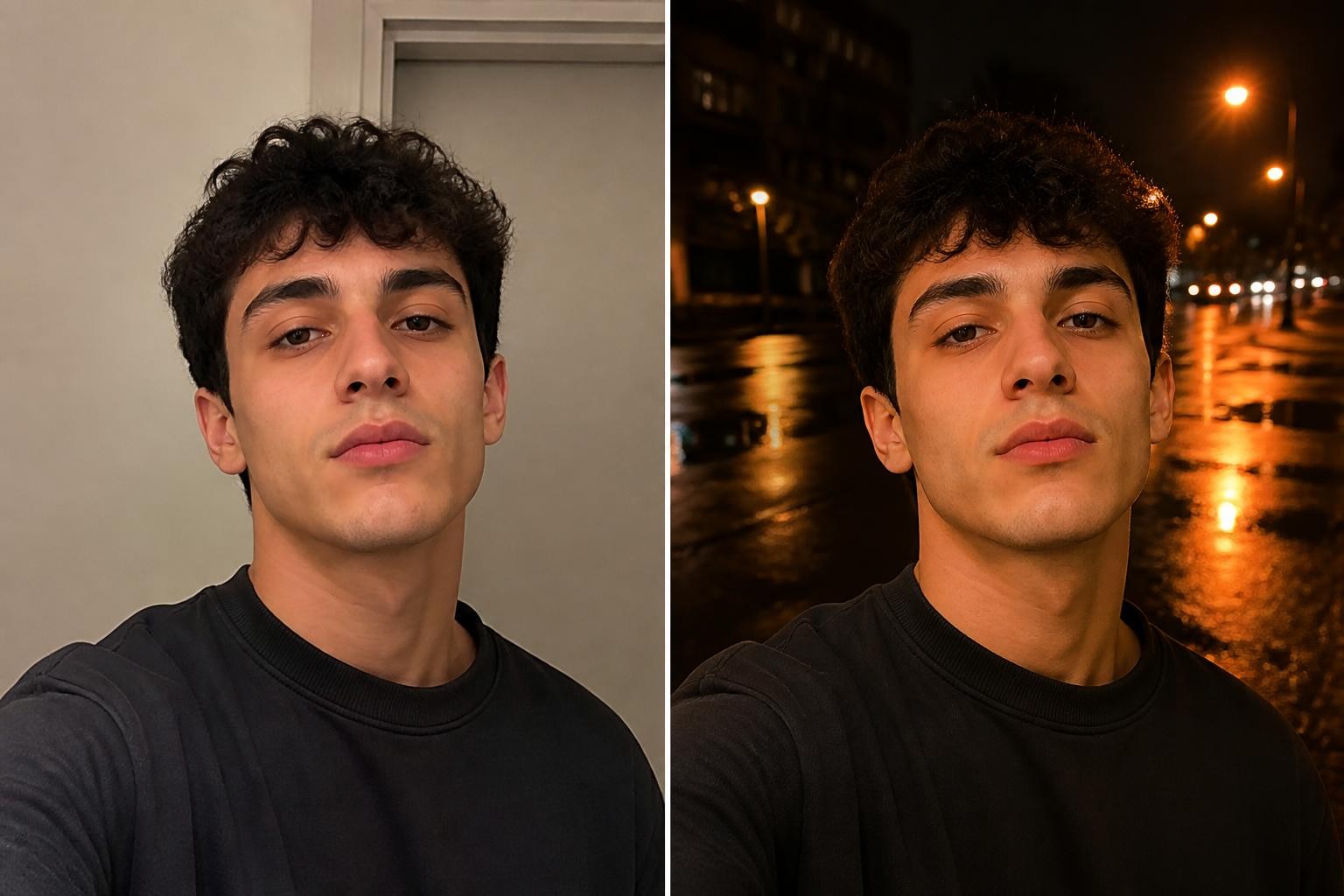
A biruli trending prompt is a ready-made AI photo prompt built for one job: turning an ordinary selfie into a cinematic, social-ready portrait while keeping your face recognizably yours. The style comes out of a Hindi-language prompt-sharing community, and it spread across Instagram Reels, WhatsApp, and YouTube Shorts because it requires zero prompt-engineering skill. Upload a photo, paste the text, generate.
There is one catch. Every biruli trending prompt is written for a specific subject, outfit, and mood. Paste it unchanged and you often get a polished photo of someone who is not quite you, wearing clothes you do not own, in a scene that does not fit your feed. This guide explains what makes the style work, shares four adaptable prompt cases, and shows how to apply any new trending prompt to your own photo without losing your identity. If you have already tried a few viral prompts and felt the results looked generic, the adaptation sections below are written for you.
What makes a biruli trending prompt work
Look closely at the prompts behind these viral edits and four building blocks repeat almost every time. Once you can name them, you can read any prompt in this genre in a few seconds and predict what it will produce before you ever run it.
Identity preservation comes first
Nearly every biruli trending prompt opens with strict face-protection language: "keep the exact facial features," "same exact face in all frames," "use the uploaded photo as the only identity source." That is the core promise of the genre. The trend is not fantasy art; it is a sharper version of you.
The wording matters more than most people realize. Vague lines like "make it look like me" give the model room to guess, while explicit constraints, covering facial features, hairstyle, skin tone, and expression, narrow that room considerably. If a prompt you find online skips preservation language, add your own before generating. Two sentences are usually enough: one naming what must stay fixed, and one naming what is allowed to change, such as clothing, background, and lighting.
Multi-frame collage storytelling
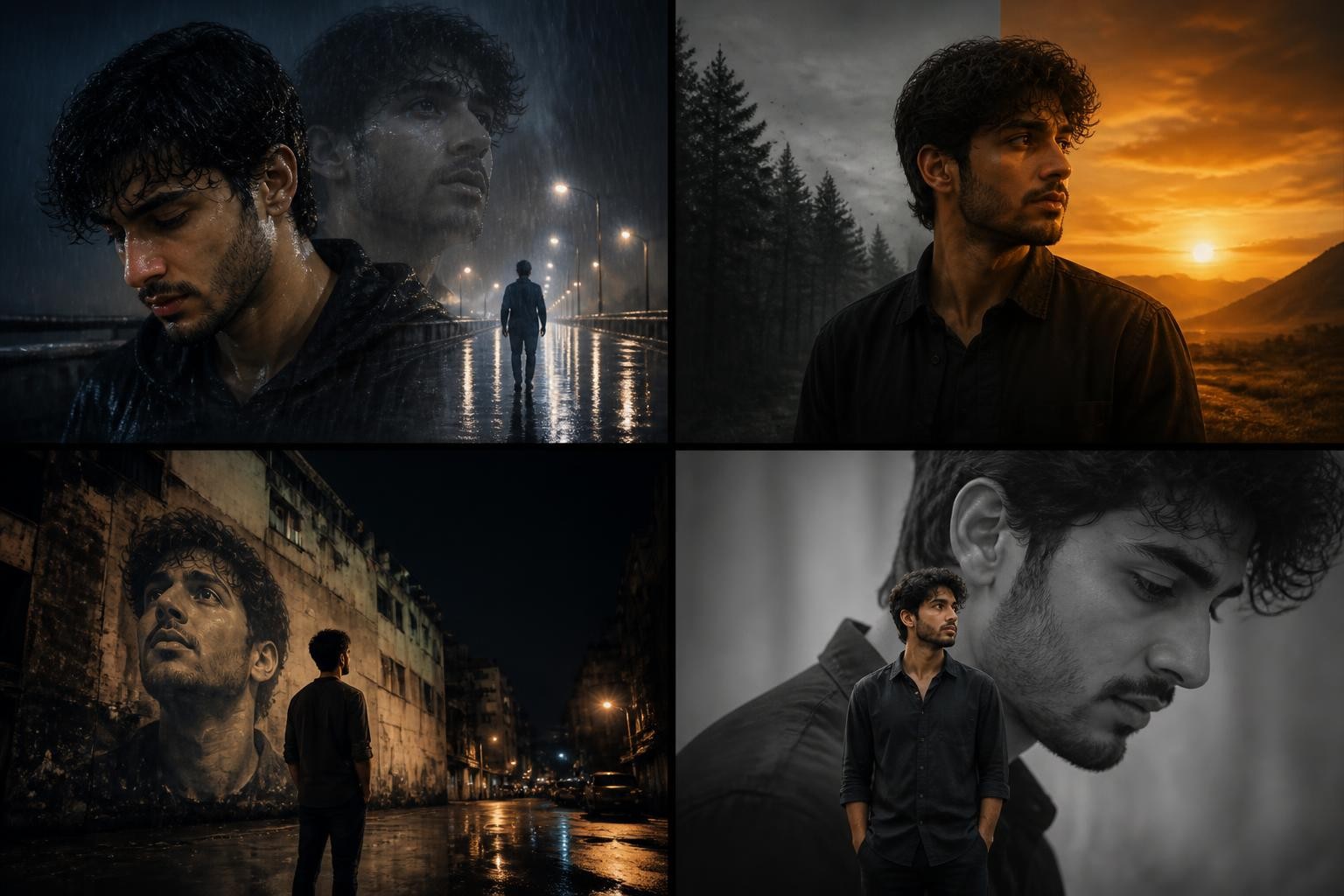
Instead of one scene, many prompts describe two or three stacked frames: looking at the sky, walking on a wet road, sitting beside a bike. The collage turns a single image into a mini narrative, which is exactly what performs well as a reel cover or story post, because the viewer gets a sequence instead of a snapshot.
The frames usually follow a loose emotional arc rather than random poses: a moment of anticipation, a moment of movement, and a moment of rest. When you adapt this structure, keep the arc. Three frames of the same pose from different angles look like a contact sheet; three frames with a beginning, middle, and end look like a story.
Environment drives the mood
Rain, fog, night streets, forests, sunset valleys. In this style the setting is not decoration; it carries the emotional tone. A prompt that says "cinematic" but names no environment gives the model nothing to build mood from, and the result tends to default to a flat studio look.
Notice how the strongest examples pair weather with light: rain with streetlight reflections, fog with cool morning tones, sunset with warm rim light. That pairing is what makes the scene feel photographed rather than rendered. When you swap environments, swap the lighting description with it.
Camera language sets the finish
Specific gear vocabulary, such as an 85mm lens, an f/1.8 aperture, shallow depth of field, and DSLR-style bokeh, pushes the model toward a photographic finish instead of a generic digital illustration. You do not need to understand photography to benefit; the words themselves steer the render.
A practical rule: one camera body or lens reference, one aperture or depth cue, and one lighting cue are enough. Stacking five different camera models into a single prompt does not make the output five times more realistic; it just adds noise that competes with the instructions that actually matter.
Four biruli trending prompt cases you can adapt today
Each biruli trending prompt below follows the signature formula: identity lock first, then scene, then camera finish. Outfits, locations, and moods are the variables you should swap for your own. The quoted preservation sentences are the parts you should keep nearly word for word.
Case 1: Rainy three-frame collage
Best for emotional, moody posts and reel covers.
Vertical 4:5 cinematic collage with three emotional frames after rain, same exact face in all frames, preserve facial features, hairstyle, and skin tone perfectly. Black oversized hoodie, grey cargo pants, sneakers. Top frame: looking upward at the sky with raindrops on the face. Middle frame: walking alone on a wet reflective road. Bottom frame: sitting thoughtfully beside a motorcycle. Foggy atmosphere, green trees, glowing puddle reflections, realistic rain particles, soft dreamy transitions between frames, DSLR realism, premium HDR lighting, sharp skin texture.
Swap the outfit and the three actions, but keep "same exact face in all frames" untouched. That one sentence does the heavy lifting, because multi-frame prompts are the most prone to producing three different-looking people.
Case 2: Split-tone cinematic poster
Best for dramatic profile pictures and announcement posts.
Ultra-realistic cinematic portrait poster in 4:5 ratio using the uploaded photo as the only identity source. Preserve exact facial identity, hairstyle, and body proportions. The person stands on the left side of the frame in side profile, one hand touching a tall wooden pole at the exact center. Left half of the scene: dark moody forest in desaturated grey tones. Right half: glowing orange sunset sky with warm golden light, a mountain valley, and distant town lights below. Grassy hilltop foreground, flower garland wrapped around the pole, strong contrast between the cold and warm sides, photorealistic, 8K detail.
The cold-warm split is the viral element. You can replace the pole with a tree, a door frame, or a mirror edge, as long as one object keeps dividing the two moods. What you should not replace is the explicit placement language, because the composition collapses without it.
Case 3: Night street mural portrait
Best for attitude-driven street-style edits.
Ultra-realistic cinematic night street portrait of a young man standing with his back to the camera, looking up at a giant hyper-detailed mural painted on an old urban wall. Wet reflective road after rain, warm orange streetlight glow, black and amber color grading, soft fog, realistic wall texture. The mural shows a powerful mythological figure with intricate details and covers most of the wall. Strong depth and scale contrast between the small human figure and the giant artwork. White oversized shirt, loose blue jeans, realistic sneakers, natural posture, shallow depth of field, photorealistic, contemplative mood.
This biruli trending prompt works because the subject faces away, which relaxes the identity constraint slightly. Keep the preservation sentence anyway, since the face is still partially visible. The mural subject is fully swappable: a tiger, a wave, a deity, or an abstract figure all work, as long as the scale contrast between person and wall stays extreme.
Case 4: Layered black-and-white DP edit
Best for display pictures and profile refreshes.
Ultra-premium portrait DP edit in vertical 4:5 ratio. Use the person from the reference photo, keep facial features, hairstyle, and skin tone perfectly unchanged. Layer one: a massive desaturated black-and-white close-up of the face filling the background, soft blurred forest behind with large green bokeh circles. Layer two: the same person in sharp full color, a small full-body figure in the right foreground, sage green casual shirt, beige linen trousers, white sneakers, hands in pockets on a forest path. Vivid color against the monochrome background, fresh nature palette, premium natural HDR, sharp detailed finish.
The two-layer structure, giant monochrome background plus small color subject, is reusable with any palette. Forest green is simply the current favorite; deep red against a city backdrop or royal blue against a beach both follow the same logic.
The five variables to swap in any biruli trending prompt
Adaptation is easier when you treat every biruli trending prompt as the same five slots filled with different values.
- Subject description: age range, build, and general vibe. Change this only if the original subject is very different from you.
- Outfit: the single easiest swap and the one that makes the result feel personal. Match it to clothes you actually wear.
- Environment and lighting: swap them as a pair, never separately, or the scene stops feeling coherent.
- Frame count and poses: keep the emotional arc, replace the specific actions with gestures that feel natural to you.
- Aspect ratio and platform cues: 4:5 for feed posts, 9:16 for reels and stories, 1:1 for profile pictures.
Everything else, especially the preservation sentences and the camera language, should survive your edits mostly intact.
How to use a biruli trending prompt with your own photo
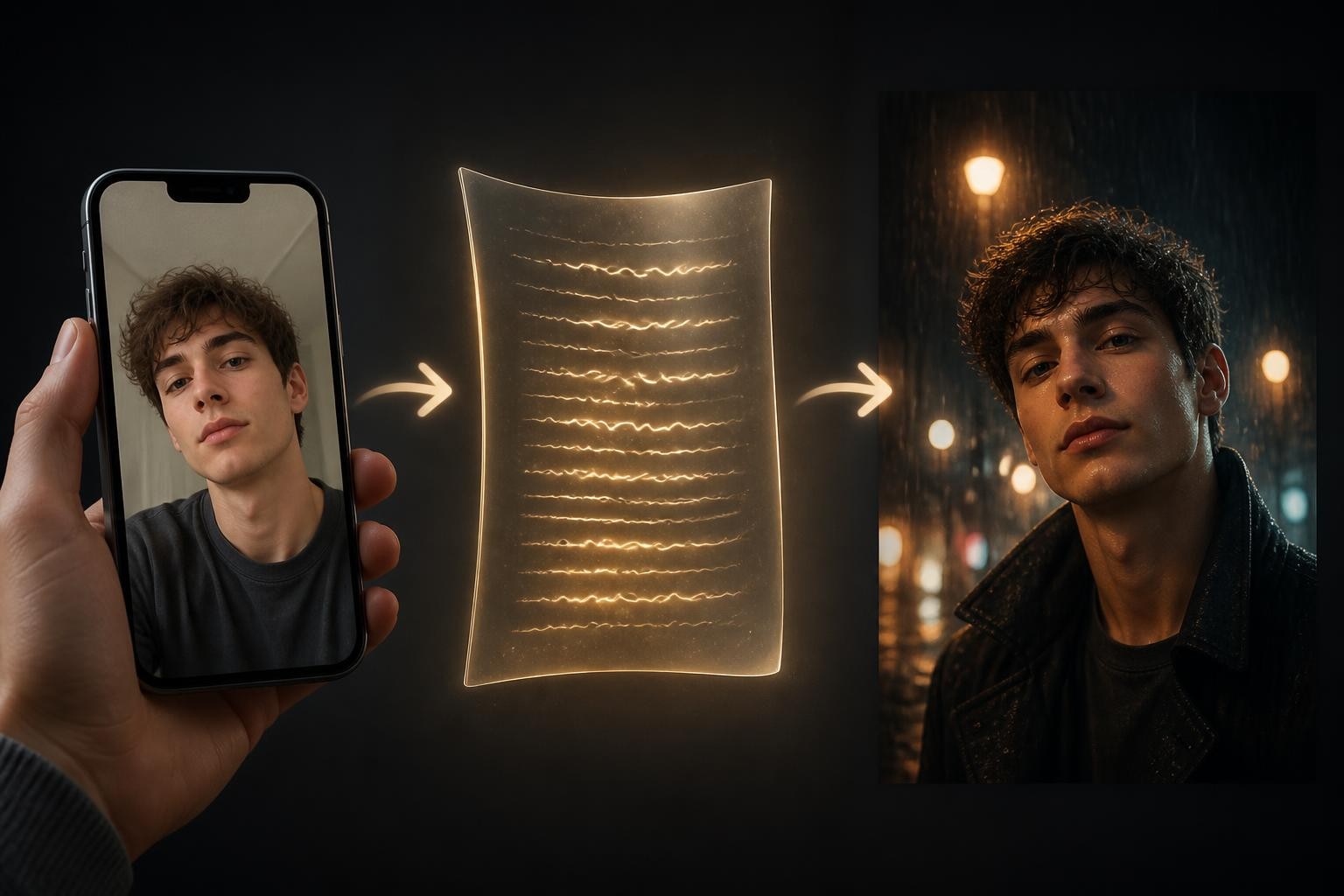
- Start with a sharp, well-lit source photo. Your face should fill a good part of the frame, without heavy filters. Weak input is the number one cause of identity drift.
- Choose a case whose mood matches your goal: collage for storytelling, poster for drama, mural for attitude, layered DP for profile use.
- Paste the biruli trending prompt into your image tool and upload the photo as the identity reference.
- Edit the five variables before generating: outfit, location, colors, poses, and ratio. Keep every sentence about preserving the face.
- Set the aspect ratio to match the platform before you generate, not after, because cropping a finished image throws away composition the prompt worked to create.
- Generate two or three versions and compare them at full size before downloading. Zoom to one hundred percent on the eyes, hairline, and hands; those are the first places where a model quietly betrays a weak render.
Common failure points and quick fixes
The most frequent biruli trending prompt failure is face drift: the output looks premium but the person is a stranger. Fix it by shortening the scene description, strengthening the preservation sentence, and regenerating with a sharper source photo taken at eye level.
The second failure is a cluttered frame, usually caused by stacking too many effects, such as smoke, neon, particles, and glass panels in one prompt. Remove one effect at a time until the subject is clearly the focal point. A good test is to squint at the thumbnail: if you cannot tell where the person is within a second, the frame is too busy.
The third failure is tonal mismatch: a dramatic stormy prompt paired with a bright smiling selfie confuses the model about which mood to follow. Retake or choose a source photo whose expression roughly matches the target scene. Finally, watch the aspect ratio: a prompt written for 4:5 will crop awkwardly in 9:16 unless you say so explicitly.
Quick answers to common questions
Do these prompts work in any AI image tool?
A biruli trending prompt works in any tool that accepts an uploaded reference photo plus a text prompt. Results vary mainly in how strictly each model follows preservation language, so expect to regenerate a few times when switching tools, and expect photo-first editors to outperform pure text-to-image generators on identity accuracy.
Why does my result look like a different person?
Almost always one of three causes: a blurry or heavily filtered source photo, a preservation sentence that was edited or deleted, or a scene description so long that it drowned out the identity instructions. Fix them in that order.
Can I translate a biruli trending prompt into another language?
You can, but keep the technical camera terms in English, since most models parse photography vocabulary more reliably in English than in translation.
How often does the style change?
Fast. A new trending prompt family appears every few weeks, usually tied to a season, festival, or reel format. The four building blocks stay stable even when the surface theme rotates, which is why learning the structure beats collecting individual prompts.
When to write your own instead of copying
Whenever a new trending prompt appears, treat it as a template, not a finished product. Once you understand the four building blocks, identity lock, frame structure, environment, and camera language, you can assemble your own version in a few minutes, tuned to your face, your wardrobe, and your audience. That is also the point where results stop looking like everyone else's viral edit and start looking like your brand.
A simple way to practice: take one case from this guide, rewrite all five variables for a different occasion, and compare the output against the original.
Try the style on your own photo
The fastest way to learn the formula is to run one real edit. Upload a selfie, paste a biruli trending prompt, and generate your first cinematic portrait in minutes, then swap the variables until the result actually looks like you.